

.svg)
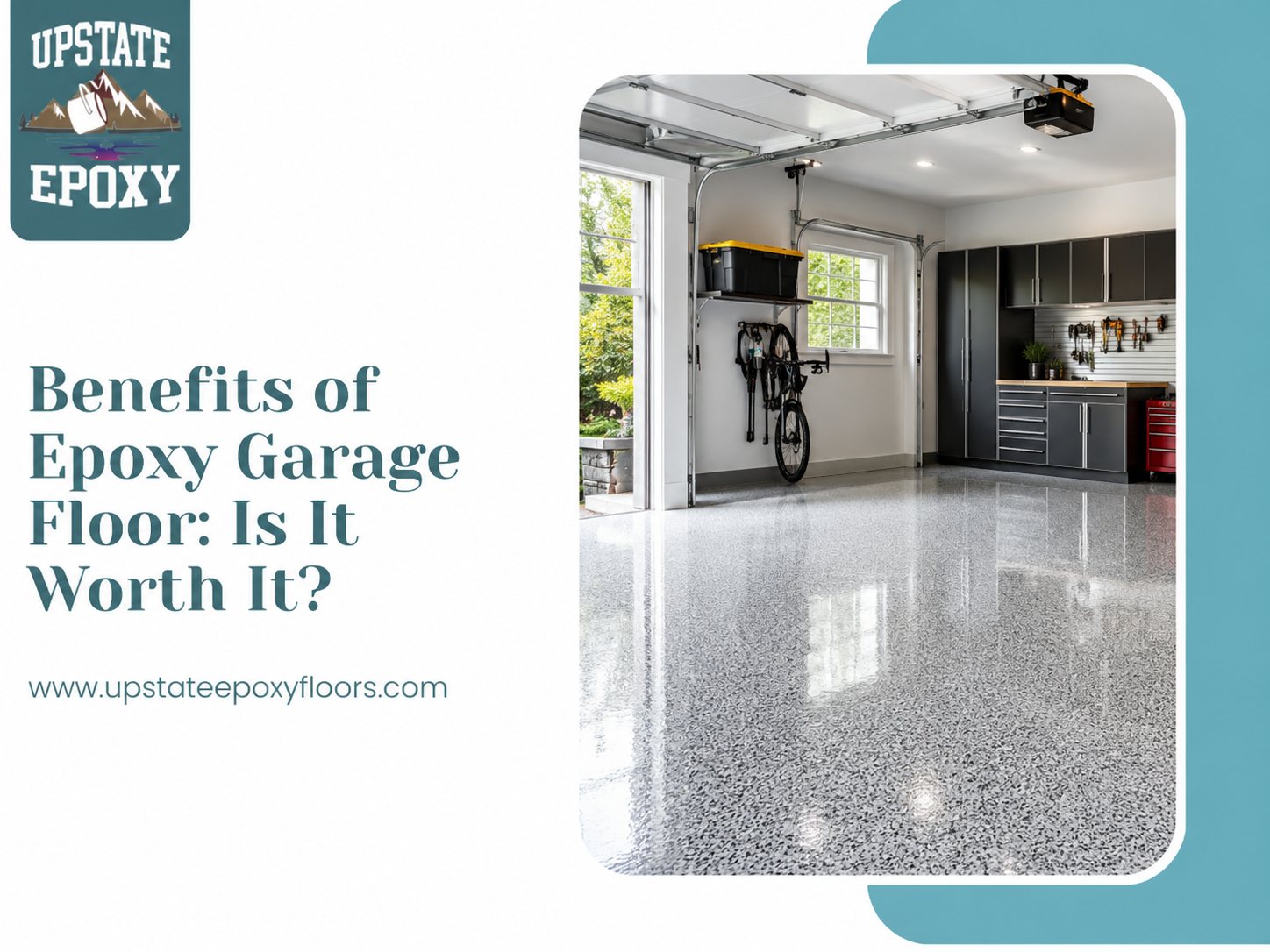
If you're weighing whether to coat your garage floor, you probably want a straight answer about the benefits of an epoxy garage floor and whether the upgrade actually pays off. This article breaks down what epoxy does for a concrete garage floor, the advantages that matter most day to day, the limitations worth knowing, and what really drives the cost. You'll also learn how epoxy holds up to New York winters, how store-bought kits compare to professional systems, and how to keep the finish looking sharp for years. By the end, you should have a clear sense of whether an epoxy garage floor is the right call for your home.
Epoxy is a two-part coating made by combining a resin with a hardener. Once mixed, the two components trigger a chemical reaction that bonds the coating tightly to prepared concrete and cures into a hard, durable surface. That's very different from ordinary floor paint, which simply dries on top of the slab and wears off over time. A true epoxy system becomes part of the floor, forming a seamless layer built to handle everything a garage throws at it.
Most professionally installed garage floors are built in layers: a primer or base coat, one or more pigmented color coats, optional decorative flakes, and a clear topcoat that adds gloss and protection. That layered build is a big reason a professional coating outperforms a basic single-part product from a hardware store.
So what do you actually gain from the upgrade? Here are the benefits of an epoxy garage floor that homeowners tend to notice first.
A cured epoxy coating is hard and impact-resistant, so it stands up to vehicle traffic, rolling toolboxes, jack stands, and the occasional dropped wrench. Bare concrete looks tough, but it slowly chips, cracks, and "dusts" that fine gray powder you sweep up again and again. Epoxy seals the surface and adds a protective layer that keeps the slab in better shape for longer.
Because the surface is seamless and non-porous, there are no pores or grout lines to trap dirt, oil, or grime. Most messes wipe up with a rag or a damp mop, and everyday dust clears with a quick sweep. For a space that usually collects the most mess in the house, that alone wins a lot of people over.
Oil, antifreeze, brake fluid, and road salt will stain raw concrete permanently because the slab soaks them right in. A quality epoxy coating resists absorption, so spills sit on top of the surface and clean away instead of leaving a lasting mark. This is one of the most practical advantages for anyone who works on vehicles or parks a wet, salty car inside during winter.
A glossy epoxy finish reflects overhead light and makes the whole garage feel brighter, which is a real help when you're working after dark or in the short days of winter. Professional installers can also add anti-slip aggregate to the topcoat to improve traction when the floor gets wet, a smart choice in a climate where cars track in snow and slush.
Epoxy transforms a dull gray slab into a floor that looks intentional and complete. You can choose solid colors or add decorative flake blends that hide minor imperfections and give the floor texture and depth. If you'd like to see how different color and flake combinations look, an epoxy color chart is a helpful starting point before you commit.
Your concrete slab is a significant part of your garage, and a coating protects that investment from moisture, wear, and staining. A clean, well-finished garage also shows well to buyers and can make the space feel like a usable extension of the home rather than a rough storage area.
New York garages take a beating in the colder months, and that's a big part of why an epoxy garage floor appeals to homeowners across the region. Snow, slush, and road salt ride in on your tires and boots, then melt into puddles on the slab. Salt is especially hard on bare concrete; it draws in moisture and, over repeated winters, contributes to surface scaling and pitting.
Freeze-and-thaw cycles add to the problem. Water works its way into tiny pores and cracks in concrete, freezes, expands, and slowly breaks the surface apart. A properly installed epoxy coating seals the slab so that salty, wet runoff stays on top where you can clean it away, rather than soaking in. Combined with the temperature swings and humidity a garage sees between seasons, that protection is one of the strongest arguments for coating your floor in this climate.
It helps to weigh the garage floor epoxy pros against a few honest limitations before you decide. Here's a balanced view.
What you gain:
• A tough, long-lasting surface that resists chips, stains, and chemicals
• Fast, easy cleanup with no pores or seams to trap grime
• A brighter garage thanks to the light-reflecting finish
• Optional slip resistance and a wide range of colors and flake designs
• Protection for the concrete slab underneath
What to keep in mind:
• Surface preparation is everything coatings fail when they're applied over unprepared or contaminated concrete
• The floor needs time to cure before you can walk or park on it
• Cheaper single-part products can experience "hot tire pickup," where warm tires lift the coating
• A glossy floor can be slick when wet unless anti-slip additive is included
• If the slab has moisture problems, those need to be addressed first or the coating won't bond properly
The encouraging part is that most of these limitations come down to preparation and product quality exactly the areas where a professional installation makes the biggest difference.
There's no single price for an epoxy garage floor because several factors shape the final number. Rather than quote a figure that may not fit your project, it's more useful to understand what moves the cost up or down:
• The size of the garage, since pricing usually scales with square footage
• The condition of the concrete and how much crack repair, patching, or grinding it needs
• The type of system a basic single color coat costs less than a multi-coat flake system with a premium topcoat
• Whether moisture testing or mitigation is required before coating
• Add-ons like anti-slip aggregate, custom colors, or a polyaspartic topcoat
A store-bought kit will always look cheaper on paper, but that price rarely accounts for the shorter lifespan and the labor of doing it yourself. A professional quote reflects proper preparation and a system built to last, which is where the long-term value lives.
It's worth being clear about the difference between the two, because they aren't the same product. Consumer kits sold at big-box stores are usually water-based, relatively thin, and designed for light-duty use with minimal surface prep often just an acid etch. They can look good at first, but they tend to wear faster and are more prone to peeling and hot tire pickup.
Professional systems use higher-solids coatings applied in a thicker build, over concrete that's been mechanically ground rather than just etched. That mechanical profile is what lets the coating bond deeply and last. Installers also test for moisture, repair cracks correctly, and control cure conditions. If you want a floor that holds up for many years in a demanding New York garage, that difference in preparation and materials is the deciding factor.
One of the quiet advantages of epoxy is how little upkeep it needs. A few simple habits keep the finish looking fresh:
• Sweep or dust mop regularly to keep grit from dulling the surface
• Damp mop occasionally with a mild cleaner skip harsh, acidic products
• Wipe up oil, chemical, or salt spills promptly rather than letting them sit
• Use pads under heavy items and avoid dragging sharp metal across the floor
• In winter, rinse away built-up road salt so it doesn't accumulate over the season
For most homeowners, the answer is yes. If you want a garage that's easier to clean, more resistant to stains and chemicals, brighter to work in, and better protected against salt and moisture, the benefits of an epoxy garage floor line up closely with what people actually want from the space. The upgrade makes the most sense when the work is done right with thorough concrete preparation and a quality coating system matched to how you use the garage.
Whether it's worth it for you comes down to your goals, your budget, and the condition of your existing slab. If you plan to stay in your home, use the garage often, or simply want the space to look and function better, a professionally installed floor is usually money well spent.
How long does an epoxy garage floor last?
With proper installation and basic care, a professionally installed epoxy floor can last many years often well over a decade. Longevity depends heavily on the quality of the surface prep, the coating system used, and how the garage is used and maintained.
Is an epoxy garage floor slippery?
A high-gloss epoxy surface can be slick when wet, but installers can blend anti-slip aggregate into the topcoat to improve traction. This is a common and recommended option in climates where cars track in snow and water.
Can epoxy be applied over old or cracked concrete?
In many cases, yes. Cracks and minor damage are usually repaired and the slab is ground and cleaned before coating. Concrete with serious structural issues or ongoing moisture problems needs to be evaluated and addressed first so the coating can bond properly.
How long before I can use the garage after installation?
Cure times vary by system and conditions, but many floors are ready for foot traffic within roughly a day and vehicle traffic within a few days. Your installer will give you specific timelines based on the products used and the weather at the time.
Does epoxy peel or lift in cold New York winters?
A properly prepared and professionally installed system holds up well to cold and to seasonal temperature swings. Peeling is far more common with thin, water-based kits applied over poorly prepped concrete than with quality coatings installed over a ground surface.
Is professional installation really worth it over a DIY kit?
If you want the floor to last and look good for years, yes. The biggest predictor of success is preparation, and professionals grind the concrete, repair it correctly, test for moisture, and apply thicker, more durable systems than most consumer kits provide.
The benefits of an epoxy garage floor durability, easy cleaning, stain and chemical resistance, a brighter space, and real protection against salt and moisture add up to a genuinely practical upgrade, especially for New York homeowners dealing with tough winters. Like any home improvement, the results depend on quality preparation and materials, which is where professional installation earns its keep. If you're in the Upstate Epoxy Floors service area and thinking about the switch, take a look at our garage and residential epoxy flooring services to explore your options and see what a coated floor could do for your space.