

.svg)
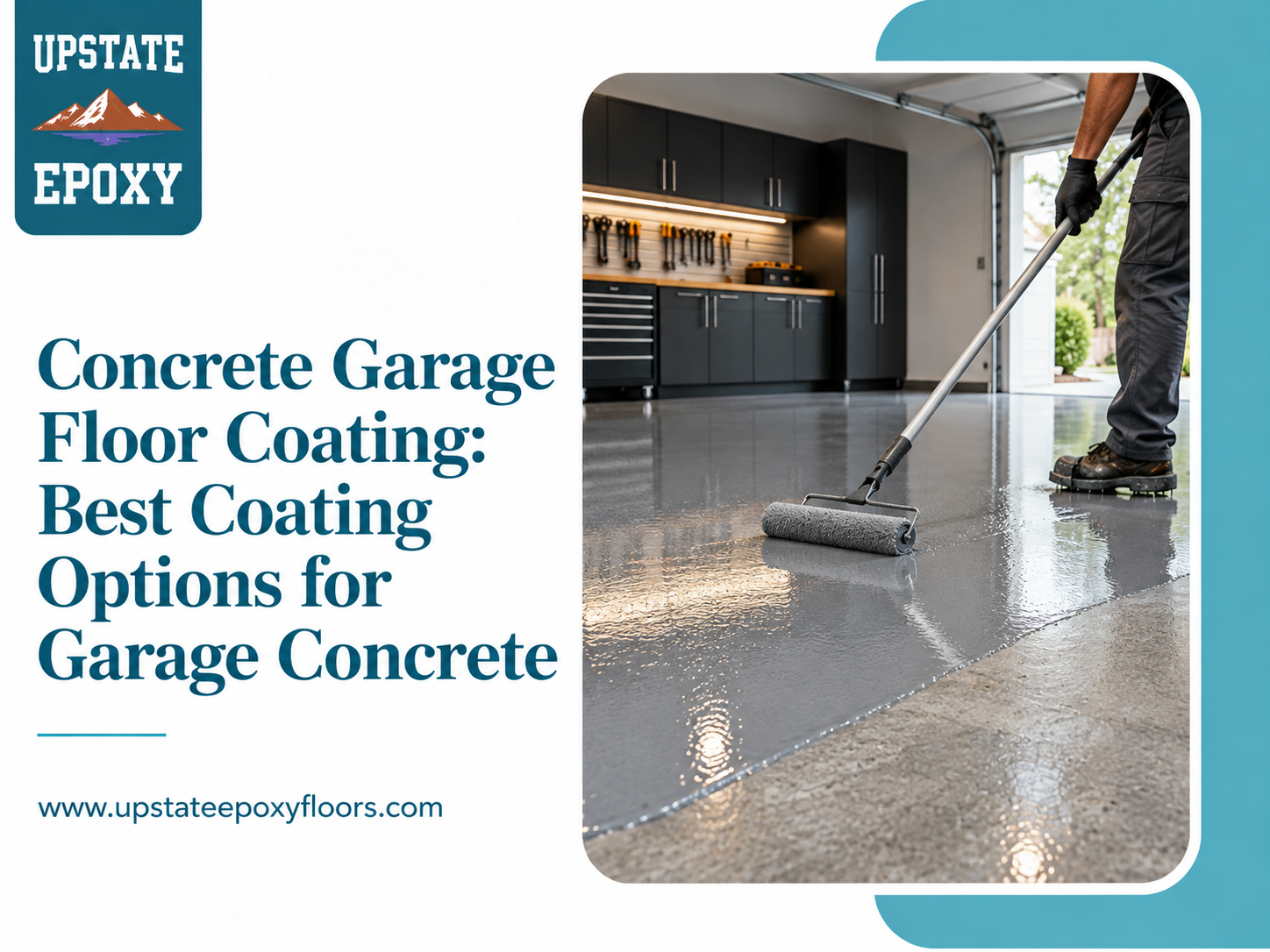
A bare concrete garage floor looks tough, but it soaks up oil, cracks under freeze-thaw stress, and traps dust no matter how often you sweep. The right concrete garage floor coating seals that porous surface, protects it from salt and spills, and makes the whole space easier to clean and better to look at. The challenge is that "coating" covers everything from a cheap can of floor paint to a professional multi-layer system, and they don't perform anywhere near the same. This guide breaks down the best coating options for garage concrete, how each one holds up, what drives the cost, and how to match a system to the way you actually use your garage. By the end, you'll know which option fits your floor, your budget, and New York's demanding conditions.
Concrete is strong in compression but naturally porous. Those tiny pores pull in moisture, road salt, motor oil, and gasoline, which is why an untreated slab stains easily and develops a layer of fine dust over time. In cold climates, water that seeps in can freeze, expand, and widen small cracks season after season.
A coating changes that by bonding to the prepared concrete and forming a continuous, sealed surface. A good system does several things at once:
Not every product delivers all of this. The difference between a weekend paint job and a professionally installed system comes down to the materials used and, just as importantly, how the concrete was prepared first.
Here are the main concrete coatings for garage floors, from the most basic to the most robust, with the trade-offs of each.
Epoxy is the most recognized option and a strong all-around choice for residential garages. It's a two-part resin that cures into a hard, impact-resistant film tightly bonded to the slab. Epoxy resists oil, chemicals, and abrasion, cleans up easily, and comes in a wide range of colors and finishes.
The main limitation of standard epoxy is sensitivity to UV light, which can cause some products to amber over time, and a longer cure window than newer materials. In practice, this is why most quality installations pair an epoxy base with a tougher, UV-stable topcoat rather than leaving epoxy as the final layer.
Polyaspartic and polyurea coatings are the modern upgrade, often used as the topcoat over an epoxy or flake base. They cure fast, resist UV yellowing, and handle temperature swings and abrasion extremely well. That fast cure also means shorter downtime; some systems allow light use the same day.
Because they're more expensive and cure quickly, these coatings are best applied by experienced installers who can work within the shorter working time. For a New York garage that sees heat in summer and freezing temperatures in winter, a polyaspartic topcoat is one of the most durable choices available.
A flake system combines an epoxy base coat, broadcast vinyl color chips, and a sealed polyaspartic or polyurethane topcoat. It's the most popular concrete garage flooring choice for homeowners because it balances looks and practicality. The chips add subtle texture that improves traction and, crucially, hide dust, grit, and salt residue far better than a solid surface.
Flake floors resist water, chemicals, stains, and abrasion, and the blend can be customized to almost any color scheme. For most residential garages, this is the sweet spot.
Metallic systems blend reflective pigments into a tinted base to create a three-dimensional, marbled finish where no two floors look alike. They're a premium, decorative option best suited to showroom-style garages and feature spaces rather than heavy work areas. They take longer to install and cure, and they show wear more than a textured flake floor, but the visual impact is hard to match.
A quartz system broadcasts colored quartz granules into an epoxy base, then seals them under a protective topcoat. The result is exceptionally tough, with strong resistance to impact, scratching, chemicals, and constant moisture. Quartz is more common in commercial and high-demand settings, but it's an excellent option for a garage that doubles as a serious workshop.
At the budget end are concrete floor paints and penetrating sealers sold in home improvement stores. They're inexpensive and easy to apply, but they're thin, wear through quickly under vehicle traffic, and offer limited protection against hot tires and chemicals. For a cement garage floor that sees daily use, these products tend to be a short-term fix rather than a lasting solution.
If you'd like to see how finished systems compare in person, browsing the epoxy floor project gallery gives a clearer picture than product labels do.
No coating performs well over poorly prepared concrete, and this is where DIY projects most often fail. A coating is only as good as its bond to the slab, and that bond depends on proper surface prep.
Professional preparation typically includes:
Skipping or rushing these steps is the leading reason coatings bubble, flake, or lift within a year or two. When the prep is done right, the same materials last dramatically longer.
Pricing varies widely, so it's more useful to understand the factors than to chase a single number. The cost of a concrete coating for garage floors generally depends on:
Color choice, on the other hand, rarely changes the price. Choosing blue over gray won't move the number; choosing a metallic system over a solid coating will. A professional on-site assessment is the only way to get an accurate figure for your specific floor.
Garages across Upstate New York face a tough mix of conditions: snow and slush tracked in on tires, road salt that leaves corrosive residue, seasonal humidity, and freeze-thaw cycles that stress the slab. These are exactly the pressures a quality coating is built to handle.
To get the most out of a concrete garage floor coating in this climate:
With proper preparation and quality materials, a professionally installed system can hold up for many years of this kind of use. Thinner DIY products generally won't survive New York winters nearly as long.
DIY coating kits can work for a clean, low-traffic slab and a homeowner comfortable with careful prep. They're affordable and widely available. The trade-offs are real, though: consumer kits use thinner coatings, usually rely on acid etching instead of grinding, and leave little room for error during application.
Professional installation brings commercial-grade materials, mechanical surface preparation, proper moisture handling, and the experience to apply fast-curing topcoats correctly. For a floor meant to last through years of vehicles, salt, and temperature swings, professional garage epoxy flooring typically delivers a longer-lasting result. The same systems extend to interior spaces too, so if you're considering coatings beyond the garage, residential epoxy flooring covers basements, laundry rooms, and home gyms.
A few recurring errors shorten the life of a coated floor:
What is the best coating for a concrete garage floor? For most homeowners, a flake system with a polyaspartic topcoat offers the best balance of durability, looks, and low maintenance. Solid epoxy is a solid mid-range option, while quartz and metallic systems suit heavy-use or showcase garages. The best choice depends on how the space is used and the condition of the slab.
How long does a concrete garage floor coating last? A professionally installed system with proper surface preparation can last many years of regular use. Lifespan depends on the coating type, traffic levels, chemical exposure, and maintenance. Thin DIY paints and sealers wear out much faster, often within a year or two under vehicle traffic.
Can you coat an old or cracked concrete garage floor? Usually, yes. Cracks and minor damage are typically repaired during surface preparation before the coating goes down. Severely damaged or heavily spalled slabs may need more extensive repair first, which is why an on-site assessment matters.
How long before I can park on a newly coated garage floor? It varies by system. Light foot traffic is often possible within a few hours, while full vehicle and heavy-use traffic usually requires a couple of days of curing. Fast-curing polyaspartic systems shorten this window; metallic systems generally take longer.
Is epoxy or polyaspartic better for a garage in a cold climate? They work best together. An epoxy base provides a strong bond and build, while a polyaspartic topcoat adds UV stability, fast curing, and resistance to the temperature swings common in New York garages. Many quality installations combine the two.
Does a coated concrete floor get slippery when wet? A high-gloss finish can be slick when wet, but anti-slip additives and textured flake or quartz systems improve traction. This is worth planning for in a garage where snow and water come in on vehicles.
The right concrete garage floor coating turns a porous, stain-prone slab into a sealed, durable, easy-to-clean surface built for daily use. Epoxy, polyaspartic, flake, quartz, and metallic systems each have their place, and the best option depends on how you use your garage, the condition of your concrete, and how long you want the floor to last. Above everything, proper surface preparation is what separates a coating that lasts years from one that peels within months.
If you're in Upstate Epoxy Floors' New York service area and want help choosing the right system for your garage, request a free estimate and get a recommendation matched to your floor and the local climate.