

.svg)
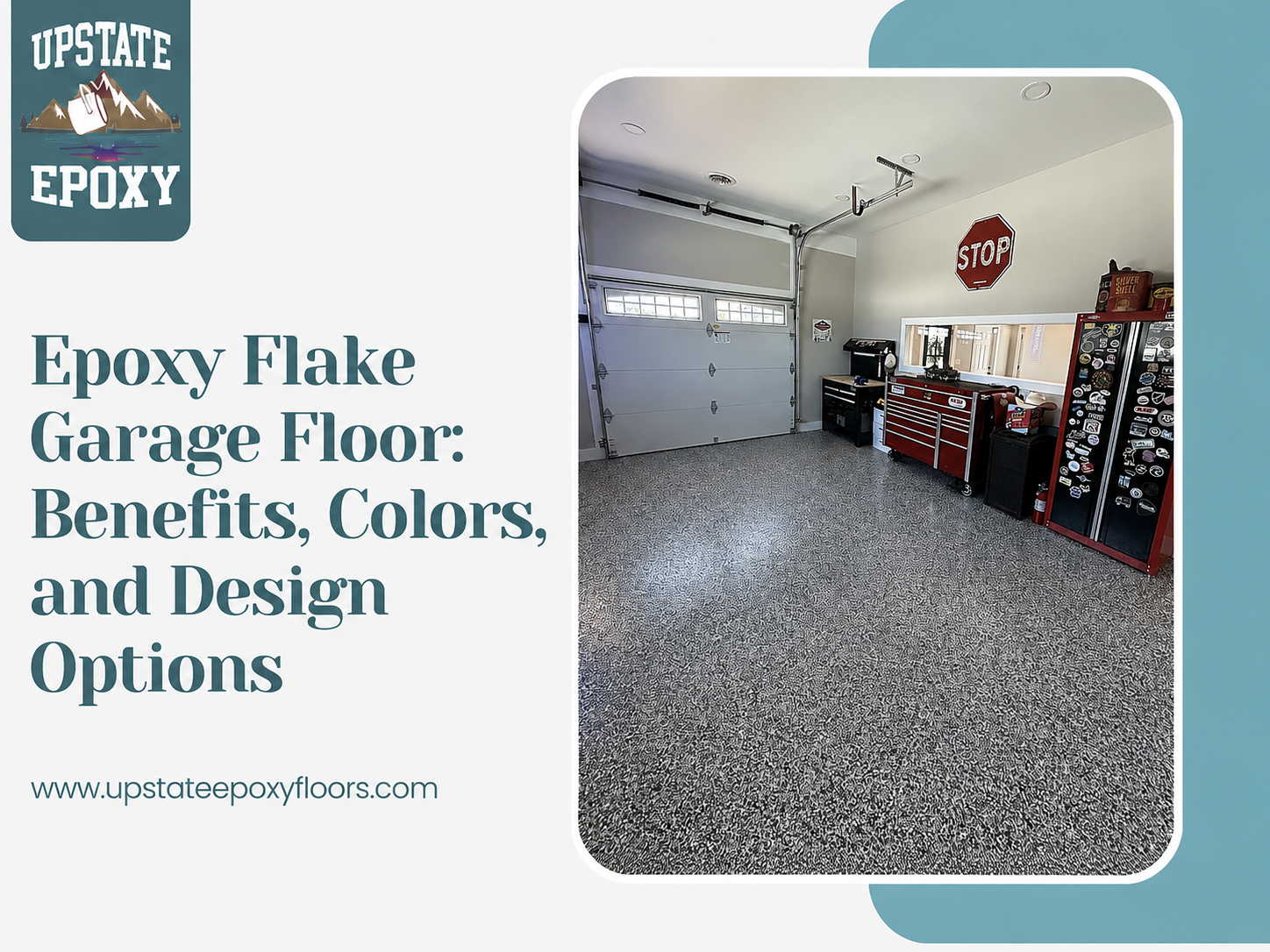
An epoxy flake garage floor gives concrete a tough, decorative finish that holds up to vehicles, tools, weather, and everyday wear. If you're weighing your options for a garage upgrade, this guide walks through how flake coatings work, the design choices available to you, the benefits worth knowing about, and what to expect during installation and long-term use. You'll also learn how flake systems compare with plain solid-color epoxy, what a realistic budget looks like, and when it makes sense to hire a professional installer rather than tackling it yourself. By the end, you should have a clear picture of whether an epoxy flake garage floor is the right fit for your home or business.
A flake garage floor coating is a multi-layer system built on top of prepared concrete. It combines a pigmented epoxy base coat with colored vinyl chips often called flakes that are broadcast into the wet epoxy while it cures. A clear topcoat, typically polyurethane or polyaspartic, seals everything in place.
The result is the speckled garage floor look people associate with high-end residential garages, showrooms, and clean commercial spaces. The flakes aren't just cosmetic. They add a subtle texture that improves slip resistance and helps hide dust, tire marks, and minor imperfections that plain solid coatings tend to show.
A quality flake garage floor is built in layers, and each layer has a job.
This layered structure is why professionally installed epoxy floor paint flakes for garages and warehouses generally outperform single-coat kits sold at big-box stores.
Epoxy flakes for garage floors add thickness and impact resistance to the coating. A well-installed system resists hot tire pickup, dropped tools, and the daily grind of vehicles pulling in and out. The clear topcoat shields the color layer from chemicals like brake fluid, gasoline, and antifreeze.
The texture of the flakes gives the surface a slight grip, which matters in a space where wet tires, boots, and spills are common. It's one of the reasons flake systems are popular for garages, mudrooms, and workshops.
Because the topcoat is sealed and non-porous, cleanup is usually a dust mop or a quick pass with a wet mop. Dirt, salt residue, and dust don't work their way into the surface the way they do with bare concrete.
Even a properly prepared slab has minor variations. The busy pattern of a speckled garage floor visually breaks up these small imperfections, so the finished space looks more uniform than a solid color would.
A professionally installed flake garage floor commonly lasts many years in a residential setting when the concrete was prepared correctly and the right topcoat was used. That's a meaningful upgrade over painted or bare concrete that stains, dusts, and pits over time.
One of the biggest draws of flake systems is the design flexibility. Flakes come in dozens of colors and can be blended into custom combinations. A few common directions:
Grays, tans, whites, and blacks in various proportions are the most requested combinations for residential garages. They complement most home exteriors and hide dirt well between cleanings.
Browns, coppers, and warm beiges pair nicely with wood accents, brick, or traditional home styles.
Black-and-white or dark gray with bright accents create a modern, showroom-style look that works well for enthusiast garages and finished workshops.
Blends can incorporate specific palettes, team colors, brand colors for a commercial space, or accents that tie into interior finishes.
Beyond color, flake size affects the final look. Common sizes include:
Full rejection means flakes are packed edge to edge, so the base color barely shows. Partial coverage lets more of the base color come through for a lighter, less busy look. Both are valid; it comes down to how bold you want the finish.
If you want to see live color combinations before committing, ask your installer for a physical sample board rather than relying on photos alone. Screens rarely represent flake blends accurately, so an in-person look at a few options is worth the time.
New York's climate puts real demands on a garage floor. Freeze-thaw cycles, road salt tracked in on tires, snowmelt pooling under vehicles, and swings between cold winter mornings and humid summer days all take a toll on any coating system.
A few things worth knowing if you're planning an installation upstate:
For homeowners planning a full home upgrade, the residential epoxy flooring service page at Upstate Epoxy Floors walks through what's included in a typical installation, and the garage-specific service page covers the details of a flake system package.
One of the practical wins of a flake system is how little upkeep it needs.
Home improvement stores sell garage floor paint with flakes as a DIY option, and it's a legitimate weekend project for the right person. But there are real differences between a kit and a professionally installed flake garage floor coating.
DIY kits typically use a thinner water-based epoxy, a smaller quantity of flakes, and a single topcoat. Preparation is usually done with an acid etch rather than mechanical grinding. Results can look good initially, but many kits show wear, peeling, or hot-tire lift within a few years. Basic garage floor flake paint from a box store is best suited to lightly used residential garages in good condition.
Professional systems use higher-solids epoxy or polyaspartic products, mechanical concrete prep, and multiple layers with heavier flake broadcast. The upfront cost is higher, but the finish typically lasts much longer and holds up to serious use.
If you have a small residential garage in good shape and you're comfortable with careful surface prep, a kit may work for a few years. If you're upgrading a busy family garage, a workshop, or a commercial space, a professional installation is the more reliable investment.
Pricing depends on several variables, and any installer who quotes a flat number without seeing your slab is guessing. The main factors:
A useful step is to get a written estimate that itemizes prep, base coat, flake system, and topcoat separately. That's a good signal you're dealing with an installer who takes the work seriously.
Most premature coating failures come from one of these issues, and most are avoidable when they're identified before installation starts.
How long does an epoxy flake garage floor last? A professionally installed system commonly lasts many years in a residential garage when preparation was done correctly. Kit-based DIY coatings tend to have shorter lifespans, especially in busy garages.
Can I install a flake system over an old painted floor? Generally, no. Existing paint or sealer needs to be mechanically removed so the new coating can bond to raw concrete. An installer can assess whether stripping is necessary.
Is a flake garage floor slippery when wet? The texture of the flakes actually adds traction compared to a smooth solid-color coating. If you want extra grip, additional anti-slip additives can be blended into the topcoat.
How soon can I drive on it after installation? Cure times vary by product and temperature. Polyaspartic systems can often accept foot traffic within a day and vehicles in a couple of days, while traditional epoxy systems may need a full week before parking on the finished floor.
Will road salt damage a flake garage floor? A properly topcoated system resists salt residue very well. Rinsing the floor occasionally during the winter months helps keep salt from sitting on the surface long-term.
Can I customize the color blend? Yes. Flakes come in many colors and can be combined into custom blends. Ask your installer for a sample board so you can see the actual finish before installation begins.
An epoxy flake garage floor gives you durability, design flexibility, and a finish that stands up to New York's weather and everyday garage use. Between color blends, flake sizes, and coverage levels, there's real room to personalize the look while getting a coating that performs.
If you're considering an upgrade for your home or business, exploring the garage epoxy flooring services at Upstate Epoxy Floors is a good starting point. A site visit and written estimate will tell you exactly what your slab needs and what your finished floor could look like.