

.svg)
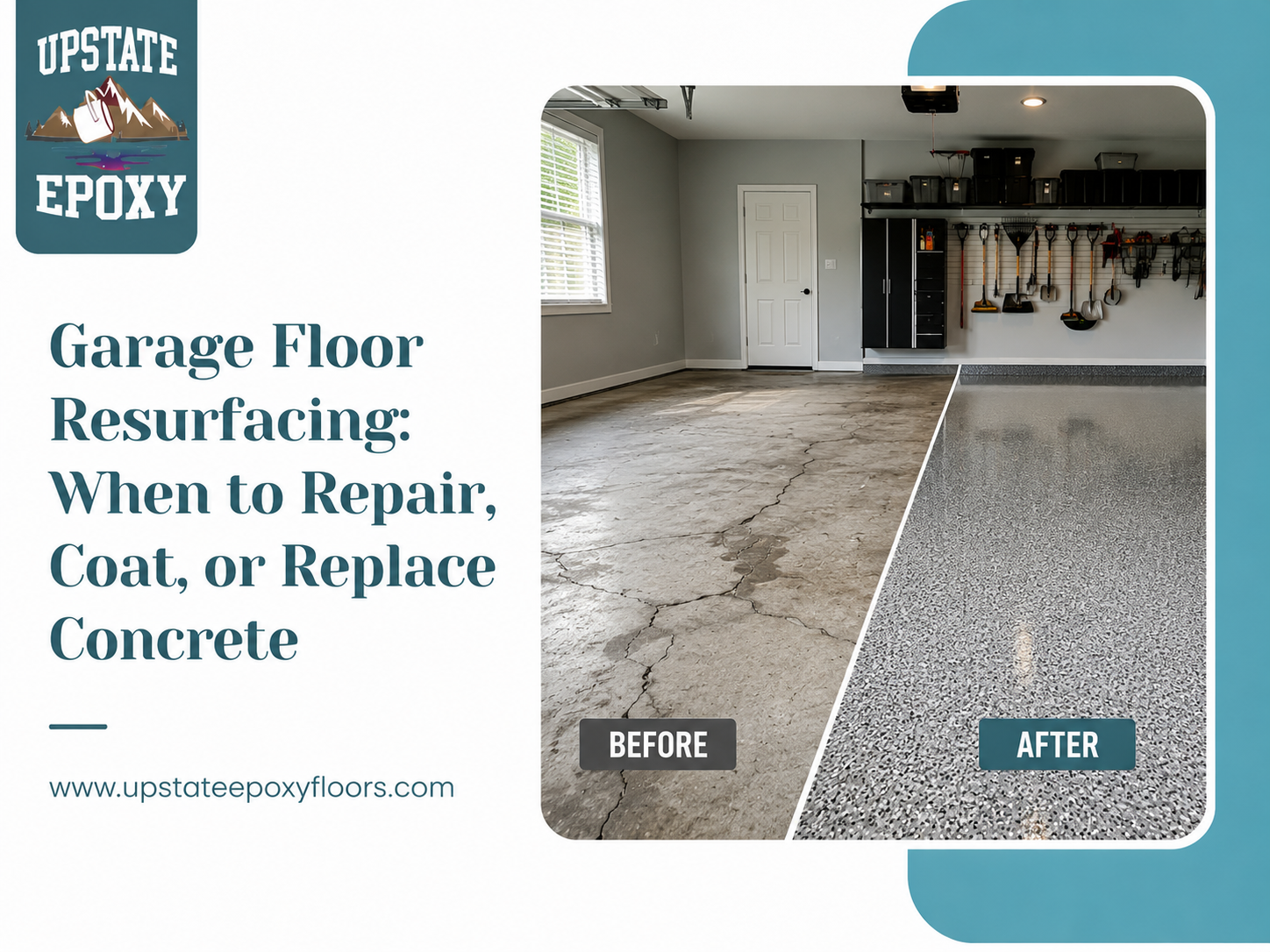
If your garage floor is cracked, pitted, stained, or just looking worn down, you're probably trying to figure out whether it can be saved or whether you're facing a bigger project than expected. Garage floor resurfacing is often the answer, but not every damaged floor needs the same fix. Some floors just need cracks patched and a fresh coating applied, while others have deeper structural issues that need to be addressed before any coating goes down. This article walks through how to evaluate your concrete, when resurfacing makes sense, when repair or full replacement is the better call, and what the resurfacing process actually involves.
Garage floor resurfacing refers to restoring the surface of an existing concrete slab rather than tearing it out and pouring new concrete. Instead of demolition, the process focuses on repairing damage, prepping the surface, and applying a new protective layer, often an epoxy or similar coating, on top of the existing slab.
This is different from a simple cosmetic touch-up. Resurfacing a garage floor typically involves real repair work: filling cracks, patching pits or spalled areas, and mechanically preparing the concrete so a new coating bonds properly. The goal is a floor that not only looks better but performs better, with improved resistance to stains, moisture, and daily wear.
Resurfacing works well because concrete slabs are usually structurally sound even when the surface looks rough. In most residential garages, the damage is limited to the top layer of the concrete rather than the foundation itself, which makes resurfacing a practical alternative to replacement.
Not every mark on your concrete means you need to resurface the garage floor. Here are signs that resurfacing is worth considering:
If you're seeing these issues but your slab is otherwise stable, resurfacing a garage floor is usually far more practical than a full concrete replacement.
This is where a lot of homeowners get stuck, since it's not always obvious from a visual inspection alone which category a garage floor falls into.
Minor issues, like a single small crack or a localized area of damage, sometimes only need a targeted repair rather than a full resurfacing project. If the rest of the slab is in good shape and the damage is isolated, patching that specific area may be sufficient, especially if you're not planning to add a decorative coating right away.
If the damage is spread across the floor, if you have multiple cracks, wear patterns, staining, or a failing old coating, resurfacing the garage floor addresses all of it at once. Resurfacing repairs the existing damage and applies a new coating in the same project, which is typically more cost-effective than fixing each issue separately over time.
Resurfacing is also the right call when you want to upgrade the floor's performance and appearance together. A properly resurfaced concrete garage floor combines structural repair with a coating that resists future oil stains, tire marks, and moisture.
Replacement becomes necessary when the slab itself is compromised rather than just the surface. Signs that point toward replacement instead of resurfacing include:
These issues usually point to a foundation-level problem, not a surface-level one, and no coating system can fix that. In these cases, an experienced flooring contractor should assess the slab before recommending resurfacing, since coating over structural damage will only lead to premature failure.
Resurfacing a concrete garage floor generally follows a sequence, though the specifics vary depending on the condition of the slab.
1. Assessment. The concrete is inspected for cracks, moisture issues, and overall stability to confirm resurfacing is the right approach rather than repair alone or replacement.
2. Surface preparation. This step matters more than almost any other part of the process. The existing surface, including old paint, sealer, or coatings, needs to be removed, typically through diamond grinding or shot blasting. This also opens up the concrete's pores so a new coating can bond properly rather than just sitting on top.
3. Crack and damage repair. Cracks, pits, and spalled areas are filled and leveled using appropriate repair materials before any coating is applied.
4. Moisture testing. Since concrete slabs can allow moisture to migrate upward, testing helps determine whether additional vapor mitigation steps are needed before coating.
5. Coating application. Once the surface is properly prepped and repaired, the new coating, often an epoxy system, is applied in the appropriate number of layers, sometimes with a decorative flake or aggregate broadcast, followed by a protective topcoat.
Skipping steps in this process, particularly surface preparation, is one of the most common reasons resurfaced floors fail early.
Resurfacing isn't a fix for every problem. It won't correct significant structural issues, and it depends heavily on proper surface preparation to succeed. A resurfaced floor is also only as good as the repair work done underneath it. If cracks aren't properly filled or moisture issues aren't addressed first, those problems can eventually show through the new coating.
The cost of resurfacing a garage floor depends on several factors: the size of the garage, the extent of crack and damage repair needed, whether moisture mitigation is required, and the type of coating system selected. A floor with minor surface wear will generally cost less to resurface than one with extensive cracking or a failed previous coating that needs to be fully removed first.
Rather than comparing resurfacing to replacement purely on upfront price, it helps to consider the full picture: resurfacing typically avoids the cost and disruption of demolition, disposal, and repouring, while still delivering a durable, updated floor. For homeowners deciding between options, Upstate Epoxy Floors' garage epoxy flooring services page outlines what factors are typically involved in an estimate.
Concrete garage floors in New York deal with more stress than floors in milder climates. Freeze and thaw cycles can worsen existing cracks over the winter months, while road salt tracked in from icy roads accelerates surface deterioration and staining. Wet vehicles sitting in the garage add ongoing moisture exposure, and temperature swings between seasons put additional strain on both the concrete and any coating applied to it.
These conditions are part of why many New York homeowners find themselves needing to resurface a garage floor sooner than expected, and why a properly prepped, durable coating matters more here than in regions with milder weather.
Some minor crack repairs and coating touch-ups can be handled as DIY projects, but full garage floor resurfacing is typically best handled by professionals, particularly because of the surface preparation and moisture testing steps involved. Mechanical grinding equipment, proper crack repair materials, and the ability to correctly diagnose whether a floor needs repair, resurfacing, or replacement all require experience that's difficult to replicate with store-bought products alone.
A professional assessment is especially valuable when the extent of the damage isn't clear. What looks like a simple surface crack from the top can sometimes indicate a deeper issue, and starting a resurfacing project without confirming that first can lead to a coating that fails prematurely.
How do I know if my garage floor needs resurfacing or replacing? If the damage is limited to the surface, such as cracks, pitting, or staining, and the slab itself is stable, resurfacing is usually appropriate. Deep structural cracks, significant settling, or persistent moisture issues typically point toward replacement.
Can you resurface a garage floor with cracks? Yes. Cracks are commonly repaired as part of the resurfacing process, as long as they're not actively shifting or indicating a structural problem with the slab.
How long does garage floor resurfacing take? Timelines vary depending on the extent of repair needed and the coating system used, since proper curing time between steps affects the overall schedule.
Is resurfacing cheaper than replacing a garage floor? Resurfacing is generally more affordable than full replacement because it avoids the cost of demolition and repouring, though the exact cost depends on the condition of the existing slab.
Do I need to remove old paint or coating before resurfacing? Yes. Old coatings typically need to be removed through mechanical preparation so the new coating can properly bond to the concrete.
Will resurfacing fix moisture problems in my garage floor? Resurfacing can address surface-level issues, but underlying moisture problems may need additional mitigation steps identified through testing before a new coating is applied.
Garage floor resurfacing gives homeowners a practical way to repair damaged concrete and upgrade its performance without the cost and disruption of a full replacement. The right choice between repair, resurfacing, or replacement comes down to how deep the damage actually goes, which is why a proper assessment matters before any coating is applied. If you're in Upstate Epoxy Floors' New York service area and aren't sure which option fits your garage, reaching out for a professional evaluation is a straightforward way to get a clear answer.