

.svg)
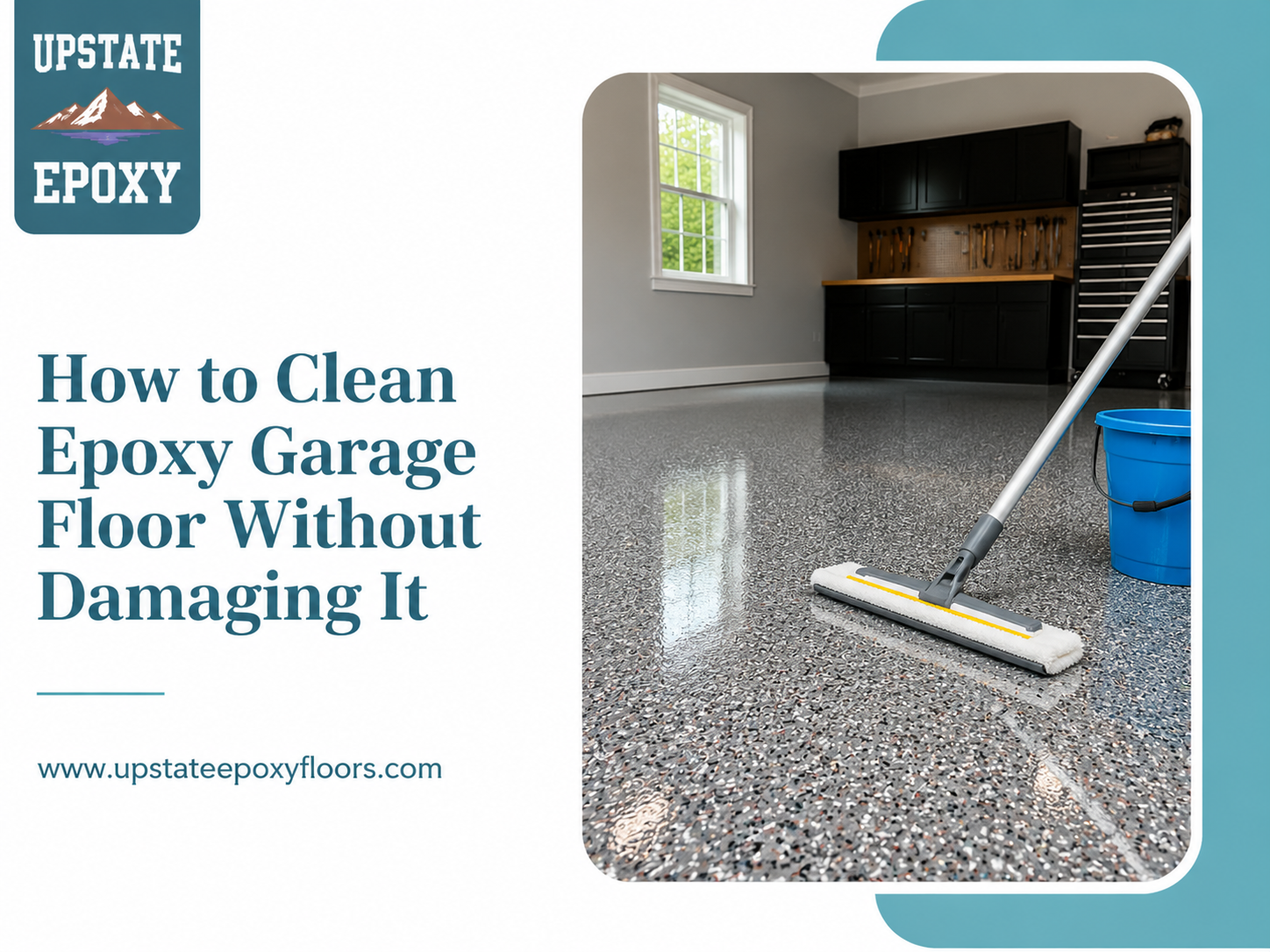
Knowing how to clean epoxy garage floor surfaces properly makes a noticeable difference in how long that coating stays looking sharp. Epoxy is a durable, low-maintenance surface, but "low-maintenance" doesn't mean it can be cleaned with anything you have under the sink. The wrong cleaning products, tools, or techniques can dull the finish, leave streaks, or wear down the topcoat faster than normal use would. This article covers the right way to clean epoxy garage floor coatings, what to avoid, how to handle common stains, and how often maintenance is really needed to keep the floor looking and performing well for years.
Epoxy garage floor coatings are more resistant to stains, chemicals, and moisture than bare concrete or basic garage floor paint, but that resistance depends on the protective topcoat staying intact. Certain cleaning products, particularly harsh chemicals or abrasive tools, can gradually wear down that topcoat, leaving the floor more vulnerable to staining and less glossy over time.
This doesn't mean cleaning epoxy garage floor surfaces is complicated. It just means being intentional about what products and tools you use, especially for regular maintenance versus tougher stain removal.
For everyday upkeep, epoxy garage floors need very little. Regular sweeping or dust mopping to remove dirt, grit, and debris is usually enough to keep the surface in good shape between deeper cleanings. Grit left to sit on an epoxy floor, especially under vehicle tires or foot traffic, can act like sandpaper over time, so staying on top of sweeping actually protects the finish.
For a slightly more thorough weekly or biweekly clean:
This routine handles most everyday dirt, dust, and light grime without putting extra wear on the coating.
When it's time for a deeper clean, the process is straightforward, but a few details matter for protecting the coating long-term.
This process works whether you're doing a routine clean or freshening up the floor after a season of heavy use.
Not every mop is a good fit for epoxy. Abrasive scrub brushes or stiff-bristled tools can create fine scratches over time, which dull the floor's finish even if the damage isn't obvious right away.
The best mop for epoxy garage floor cleaning is generally a soft microfiber mop or a soft-bristle push broom style mop designed for sealed or coated flooring. Microfiber is particularly effective because it picks up fine dust and grit without scratching, and it works well for both dry dust mopping and damp cleaning. Avoid mop heads with rough scouring pads, since these are more likely to leave visible marks on the glossy topcoat over repeated use.
Not all cleaning products are epoxy-safe. Some common household cleaners are too harsh for regular use and can degrade the topcoat over time, even if they don't cause visible damage after just one use.
When choosing an epoxy garage floor cleaner, look for:
Avoid:
A simple mix of warm water and a mild dish soap is often enough for routine cleaning, but if you're dealing with tougher stains, a dedicated epoxy-safe cleaner is generally the safer choice over a generic household product.
Even with regular maintenance, garages accumulate specific stains that need targeted attention. The best way to clean epoxy garage floor stains depends on what caused them.
Oil and grease stains: Blot up any fresh spill immediately rather than letting it sit. For dried stains, a mild degreaser safe for epoxy, combined with a soft brush, usually lifts the residue without needing anything abrasive.
Tire marks: These are common on epoxy floors and usually respond well to warm water and a mild cleaner, worked gently with a soft brush if needed.
Road salt residue: This is a frequent issue for New York garages during winter months. Salt residue should be rinsed away with warm water rather than left to sit, since prolonged exposure can leave a dull, chalky film on the surface over time.
Rust stains: These can be trickier and sometimes require a cleaner specifically designed for rust removal on coated surfaces, since standard cleaners may not fully lift the discoloration.
For any stubborn stain, it's worth testing a cleaner in a small, inconspicuous area first, since some products can react differently depending on the specific epoxy system installed.
New York garages face more seasonal wear than floors in milder climates, which makes consistent cleaning more important, not less. Road salt tracked in from icy driveways can leave residue that dulls the finish if it's allowed to sit. Snowmelt and wet vehicles add moisture that should be wiped up or mopped rather than left to pool. Freeze and thaw cycles don't directly damage a properly installed epoxy coating, but the salt and grit that come with them make regular cleaning more important during winter months than in the summer.
Keeping up with sweeping and mopping through the colder months goes a long way toward preserving the coating's finish and durability over time.
Even with proper care, epoxy coatings can show wear over the years, particularly in high-traffic areas or spots where vehicles regularly park. Signs that go beyond what cleaning can fix include:
If you're noticing these signs, it may be less about cleaning technique and more about the coating reaching the end of its usable life or having been installed without adequate surface preparation. In that case, it's worth having the floor evaluated rather than continuing to try different cleaning methods. Upstate Epoxy Floors' residential epoxy flooring services page covers what's involved if a floor needs to be reassessed or recoated.
How often should I clean my epoxy garage floor? Sweeping or dust mopping weekly, with a more thorough mop-and-rinse cleaning every few weeks, is generally enough to keep an epoxy floor in good condition under normal use.
Can I pressure wash my epoxy garage floor? Light pressure washing can be fine occasionally, but high pressure or getting too close to the surface can wear down the topcoat over time. A standard mop and cleaner is usually gentler and just as effective for regular maintenance.
What's the best mop for epoxy garage floor cleaning? A soft microfiber mop is generally the best choice, since it removes dust and light grime without scratching the surface the way stiff-bristled or abrasive mops can.
Is vinegar safe to use on epoxy floors? It's best to avoid vinegar for regular cleaning, since its acidity can dull the epoxy's finish with repeated use. A pH-neutral cleaner is a safer choice.
Why does my epoxy floor look dull even after cleaning? Dullness can result from using the wrong cleaning products, not rinsing thoroughly, or general wear on the topcoat over time. If proper cleaning doesn't restore the shine, it may be worth having the coating evaluated.
How do I remove road salt stains from my epoxy garage floor? Rinse salt residue with warm water as soon as possible rather than letting it dry on the surface, since prolonged exposure can leave a chalky film that's harder to clean later.
Knowing how to clean epoxy garage floor coatings properly is a small habit that protects a much bigger investment. Sticking to soft tools, pH-neutral cleaners, and regular maintenance keeps the coating looking and performing the way it should for years, especially in a climate like New York's where salt and moisture add extra wear. If your floor is showing signs that cleaning alone can't fix, or if you're considering a new epoxy installation and want it to hold up well long-term, reaching out to Upstate Epoxy Floors for a professional assessment is a simple next step if you're in their New York service area.