

.svg)
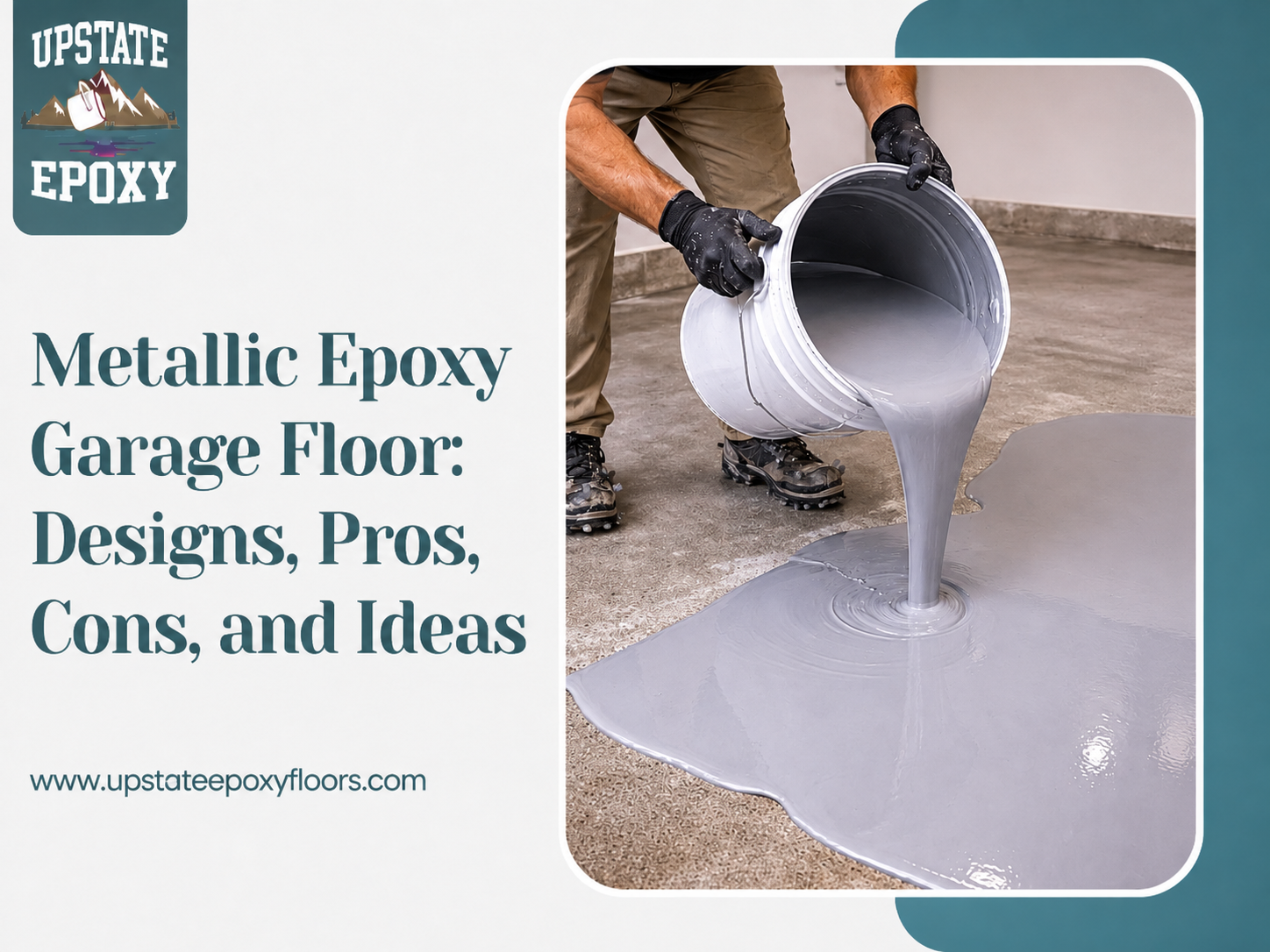
A metallic epoxy garage floor is one of the most striking finishes you can put on concrete. Instead of a solid color or a speckled pattern, it uses shimmering pigments that flow and swirl during installation to create a surface that looks more like polished stone or liquid metal than a coating. This guide covers how these floors are made, the design directions available, honest pros and cons, what drives the cost, and how the finish holds up under real garage use. By the end, you'll know whether a metallic epoxy garage floor fits the look you want, and what to expect when you compare it against flake systems, solid epoxy, and other options for custom garage floors.
Metallic epoxy is a coating system built with a clear or tinted epoxy resin mixed with fine metallic pigments. When the installer spreads and manipulates the wet epoxy, those pigments move and settle in ways that create depth, swirls, and reflective highlights. The result is a floor with a three-dimensional appearance light bounces around inside the resin rather than off a flat surface.
Unlike a flake system, which uses colored vinyl chips broadcast onto a base coat, a metallic floor gets its character entirely from how the pigments flow before the epoxy sets. That's what makes each installation genuinely one of a kind.
The installation process is where metallic floors earn their reputation as a specialty product. Every step affects the final look.
The metallic layer is where experience really shows. Two installers working with identical materials can produce very different results depending on how they read the epoxy as it flows.
Because metallic floors are built from pigment movement, the design possibilities are wide. Common directions include:
A single pigment copper, pearl, silver, or a deep blue, for example creates a rich, monochromatic look with subtle variation across the surface. It's a good fit for garages that need to feel clean and modern without competing patterns.
A marble epoxy garage floor is one of the most popular design choices in this category. Installers use two or three complementary pigments plus solvent drops or blower work to create veining and cloud patterns that mimic natural stone. Whites with gray veining, black with gold streaks, and warm creams with copper accents are all common combinations.
For more dramatic spaces, three or more colors can be blended into flowing swirls. This look reads as bold and modern, and it works well in show garages, finished workshops, or commercial spaces that want a statement floor.
Beyond color, installers can adjust techniques to produce different visual effects soft clouds, sharp veining, tight patterns, or open flowing movement. Metallic floors sit near the top of the list when homeowners are exploring custom garage floors, precisely because the design can be tailored to the space and the owner's taste.
If you're planning a metallic installation, ask your installer for photos of previous work and, when possible, a sample panel done in your chosen colors. Renderings and stock images rarely capture how the finish will actually behave in your garage.
The visual depth is the main draw. A well-installed metallic floor looks unlike any other coating and often transforms how a garage feels closer to a showroom or gallery than a utility space.
Underneath the artistic layer, this is still a multi-coat epoxy system with a protective topcoat. It resists hot tire pickup, chemical spills, and everyday abrasion when installed properly.
The sealed, non-porous topcoat wipes down easily. Dust, salt residue, and everyday dirt don't work into the surface the way they do with bare concrete.
Because the pigment movement can't be replicated exactly, no two metallic floors look the same. For homeowners who want their garage to feel personal rather than generic, that's a real benefit.
Metallic finishes can lean traditional (warm marbles, copper tones) or modern (crisp whites, deep blues, silvers). That flexibility makes them a fit for a wide range of homes.
Metallic floors are beautiful, but they aren't the right answer for every garage. The trade-offs worth knowing:
It helps to see where metallic sits among the common garage floor options:
Many homeowners considering metallic also weigh it against a flake finish. The short answer: pick metallic for looks and uniqueness, pick flake for texture and everyday resilience.
Metallic floors typically cost more per square foot than flake or solid-color systems. Rather than quote a specific number that varies by market and slab condition, the cost drivers are the useful part to understand:
A written, itemized estimate that separates prep, base coat, metallic layer, and topcoat is a good sign the installer takes the project seriously.
New York's weather creates specific demands for any garage floor coating, and metallic systems are no exception.
For homeowners exploring options in the region, the residential epoxy flooring service page at Upstate Epoxy Floors covers what's included in a typical home installation, and the garage-specific service page walks through metallic and other decorative systems.
Long-term care for a metallic floor is straightforward, but the glossy finish rewards a bit of attention.
Metallic epoxy is one of the clearest cases where professional installation is the right choice for most people. Kits sold at home improvement stores can produce a solid-color finish or a basic flake look, but genuine metallic effects rely on:
An installer who has done dozens or hundreds of metallic floors reads the epoxy as it flows and makes real-time decisions about pattern, movement, and cleanup. That's hard to replicate on a first attempt, and mistakes are expensive to fix.
If you want a decorative look on a DIY budget, a solid-color epoxy with a quality topcoat is a more realistic target than a true metallic installation.
Most metallic floors that disappoint come down to one of these decisions being made early in the project.
How long does a metallic epoxy garage floor last? A professionally installed system commonly lasts many years in residential use when the concrete was prepared correctly and a quality topcoat was applied. Neglecting maintenance or exposing the floor to harsh chemicals will shorten that lifespan.
Are metallic floors slippery? The glossy topcoat can be slick when wet. Anti-slip additives can be mixed into the topcoat to add traction without hiding the metallic design underneath.
Can I match my existing garage colors? Yes. Metallic pigments come in a wide range, and installers routinely blend custom combinations to match interior finishes, cars, or a specific color palette.
Will the pattern I approve look exactly like the final floor? No two metallic floors are identical, so a sample panel gives you the color direction and general movement not an exact preview. That unpredictability is part of the appeal for many homeowners.
Is metallic epoxy a good choice for a working garage with heavy tools? It can be, but the finish shows scratches more readily than a flake system. If you drag toolboxes, weld, or drop heavy items regularly, a flake finish may be a more practical choice.
Can a metallic floor be repaired if it gets damaged? Small chips and scratches can be touched up, but matching the original pattern in a repair is difficult. A full recoat or a section redone with a border is often the cleanest fix.
A metallic epoxy garage floor delivers a level of visual impact that flake and solid-color systems can't match. The trade-off is a higher cost, a finish that shows wear more than a textured coating, and a strong reliance on the installer's skill. For homeowners who want a garage that looks as considered as the rest of the house, it's often worth every bit of that trade.
If you're weighing this option for a home or business in the region, exploring the garage epoxy flooring services at Upstate Epoxy Floors is a good next step. A site visit and honest conversation about your goals will clarify whether a metallic system, a marble-style design, or another finish is the right match for your space.