


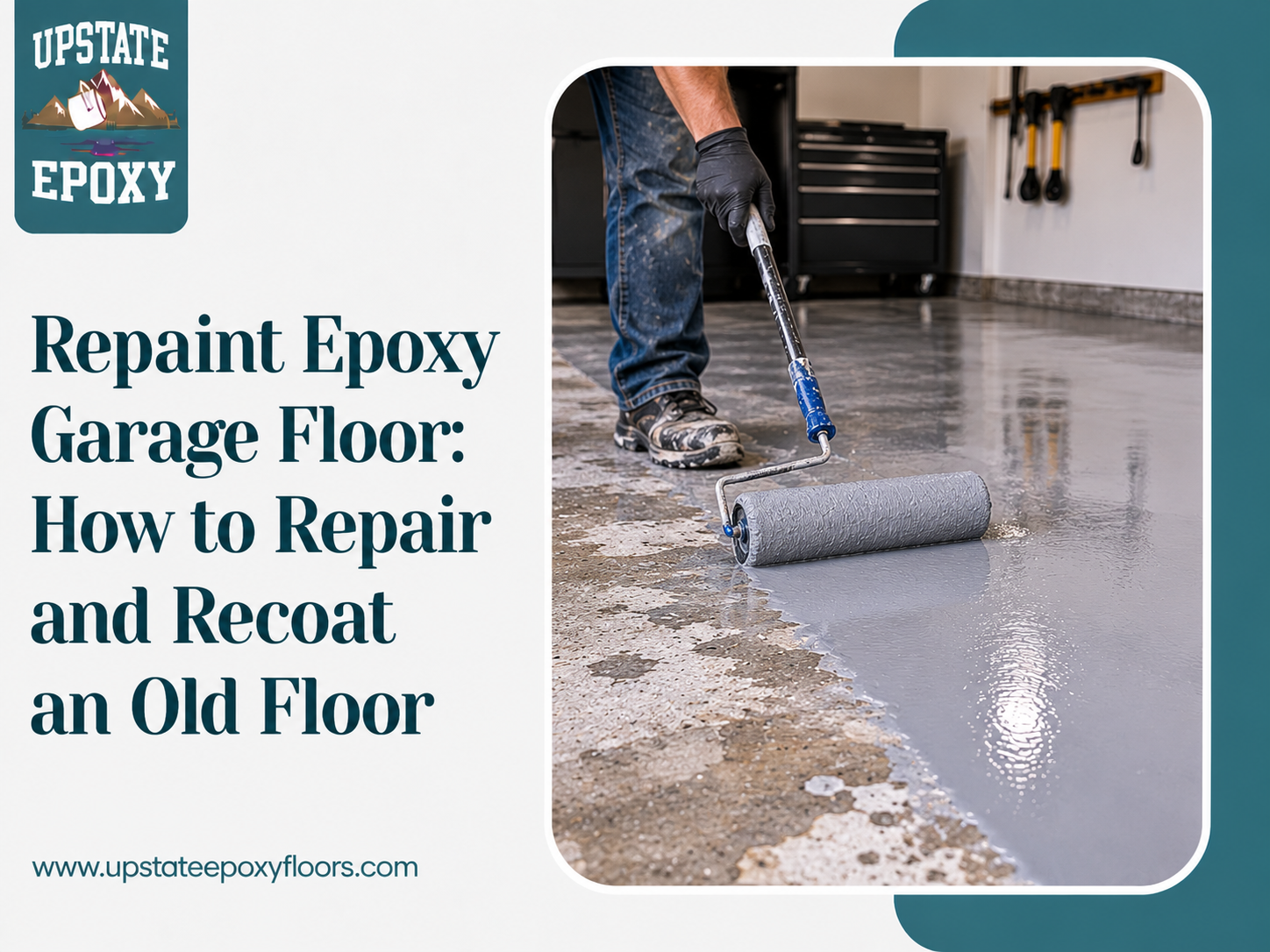
An epoxy garage floor is built to last, but no coating lasts forever. After years of hot tires, dropped tools, road salt, and winter moisture, even a well-installed floor can start to peel, chip, or fade. When that happens, the good news is you usually do not need to tear everything out. In most cases, you can repaint the epoxy garage floor and bring it back to life for a fraction of the effort of a full replacement.
This article walks you through how to decide between a simple repair and a full recoat, what the preparation and refinishing process actually involves, and where DIY ends and professional help makes sense. You will also learn the common mistakes that cause a fresh coat to fail, so your refinished floor holds up for years.
Not every worn floor needs a complete recoat, and not every problem can be fixed with a touch-up. Knowing the difference saves you money and prevents a repair that fails early.
Signs it is time to refinish or recoat:
If the damage is isolated, a spot repair may be enough. If wear is widespread, or the coating is lifting in several areas, a full garage floor refinishing job is the better long-term choice.
Yes, in most cases you can apply a new coating over an old one, but only if the existing floor is sound and properly prepared. A new layer is only as strong as what it bonds to. If you paint over a floor that is already peeling or contaminated, the new finish will fail right along with the old one.
The old epoxy needs to be:
This is the single most important point in any epoxy garage floor repair: preparation determines whether the recoat lasts a decade or starts peeling within a season.
Garage floor finishing follows a logical sequence. Each step sets up the next, and skipping any of them is where most failures begin.
Start by checking how well the old coating is holding. Press and tap across the surface, looking for loose or hollow-sounding spots. It also helps to check for moisture, since a slab that pushes moisture upward can cause even a perfect coating to delaminate. Older concrete in particular is worth testing before you commit to a recoat.
Any loose, peeling, or flaking epoxy has to come off. Scrape and grind back to a solid, well-bonded edge so you are not coating over a problem. Then deep-clean the entire floor to strip away oil, grease, dust, and salt residue. A contaminated surface is the most common reason a new garage floor finish refuses to stick.
Fill cracks and gouges with an appropriate concrete or epoxy repair filler, then smooth them level with the surrounding floor. For a seamless result, the goal is for repairs to disappear once the new coating goes on. Pitted or spalled areas may need a resurfacing layer before recoating.
Even a clean, intact floor is usually too smooth for a new coat to grip. Diamond grinding or appropriate abrasion opens up the surface and creates the texture, often called a profile, that lets the new coating bond mechanically. This step is where DIY recoats most often fall short, because the right equipment and technique matter.
Once the floor is clean, dry, repaired, and profiled, the new coating goes down in coats. Many refinished floors use an epoxy base followed by a protective top coat such as polyaspartic or polyurethane for added durability and UV resistance. Decorative flakes or color can be added at this stage if you want to refresh the look as well as the protection.
Give the floor the full cure time before walking on it, and longer before parking on it. Rushing this step is an easy way to damage a finish you just paid for. Cure times vary by product and by temperature, which is a real consideration in an unheated garage during the colder months.
Plenty of homeowners successfully refresh a lightly worn floor with a quality kit. If the existing coating is mostly intact and you are comfortable with the prep, a DIY recoat can work.
The honest limitation is that refinishing is less forgiving than a first-time install, because you are working around whatever the previous coating left behind. Professional refinishing tends to be worth it when:
If you would rather have the preparation and recoat handled correctly the first time, our garage epoxy flooring services page explains how we restore and rebuild worn floors. For whole-home projects, our residential epoxy flooring options cover the same approach for other spaces.
Climate plays a bigger role in coating wear here than many homeowners expect, and it should shape how you refinish.
These factors are exactly why proper prep and the right coating system matter more in our region. You can see the communities we serve on our New York service areas page.
Rather than quote a figure that may not match your floor, it helps to understand what drives the price of a recoat:
A refinish almost always costs less than a full removal and reinstall, which is part of why recoating is such a practical option when the slab itself is still in good shape.
Most failed recoats trace back to the same handful of errors:
Avoiding these is what separates a floor that looks new for years from one that disappoints within months.
Can I repaint an epoxy garage floor myself? If the existing coating is mostly intact and well bonded, a careful DIY recoat is realistic. The key is thorough cleaning and proper surface profiling. Widespread peeling, moisture issues, or major cracks are better handled professionally.
Do I have to remove the old epoxy before recoating? Not always. You only need to remove coating that is loose, peeling, or failing. Sound, well-bonded epoxy can stay, as long as it is cleaned and abraded so the new coat can grip it.
How do I know if my floor needs a repair or a full recoat? Isolated chips or a single worn spot usually call for a targeted epoxy garage floor repair. When wear, dullness, or peeling appears across much of the floor, a full garage floor refinishing job gives a more even, durable result.
What is the best garage floor finish for a recoat? Many refinished floors use an epoxy base with a polyaspartic or polyurethane top coat, which adds abrasion resistance and UV stability. The right choice depends on how you use the garage and your local climate.
How long before I can park on a recoated floor? It varies by product and temperature. You can typically walk on it well before you can drive on it, and cold garages extend the wait. Always follow the full cure time to avoid damaging the fresh finish.
Why did my last epoxy floor peel? The usual culprits are inadequate surface preparation, hidden slab moisture, or contamination from oil and salt. Correcting the underlying cause before recoating is what prevents the same failure from happening again.
A worn floor does not mean you are stuck with a full replacement. In most cases you can repaint an epoxy garage floor and restore both its look and its protection, as long as the slab is sound and the preparation is done right. Clean thoroughly, repair the damage, profile the surface, and choose a coating system suited to how you use the space and to our climate.
If your floor is peeling, fading, or simply tired, the team at Upstate Epoxy Floors can assess it and recommend the right repair or recoat for homes across our New York service area. Reach out whenever you are ready to give your garage floor a second life.