Epoxy Flooring in Albany, NY That Stands Up to Capital Region Winters

Salt, slush, and thirty-degree temperature swings do real damage to bare concrete, and garages across the Capital Region show it by March. Upstate Epoxy Floors coats garage, basement, workshop, and commercial concrete throughout Albany with epoxy flooring that seals the slab and stays sealed. Describe your space to us and we will assess it in person and quote the work free of charge.

What Albany Concrete Is Up Against Every Year

Bare concrete looks tough. It is not. The slab in a typical Albany garage is porous enough to drink up whatever lands on it, and between November and April that means brine, calcium chloride, sand, and gallons of gray snowmelt dripping off wheel wells. Those chlorides soak in, sit through the winter, and go to work on the surface from the inside out. Come spring you get chalky dusting, dark tire-track staining, and pitting along the parking lanes.Below grade the problem changes shape. Older homes around the city often sit on slabs poured without a vapor barrier, so humidity travels up through the floor all summer long. That is what leaves a basement smelling musty no matter how often it gets cleaned out.Epoxy flooring answers both conditions by closing the surface off entirely. Once concrete has been prepped and coated, salt, oil, and moisture have nowhere left to go. Our work here covers houses and businesses alike, from single-bay detached garages behind older neighborhoods to shop and warehouse floors along the 787 corridor, and every job opens with a look at the slab you already have.
Get A Quote

Where Epoxy Floors Work Best in Albany Homes and Businesses

Epoxy Garage Floors

Most calls we take start with the garage, and usually with the same complaint: the floor has gone chalky, stained, and is shedding dust onto everything stored on it. An epoxy garage floor puts an end to that. The coating grips prepared concrete and forms a continuous, non-porous layer, so brine drips, oil leaks, and antifreeze sit on top waiting to be wiped up instead of sinking into the pores. Meltwater squeegees straight out the overhead door. Garage floor epoxy also takes a beating without complaint from the gear that fills Albany garages, including snowblowers, jack stands, kayak racks, weight benches, and tool chests that get rolled around all year.

Residential Epoxy Flooring

Plenty of homeowners are surprised to learn the same coatings work well beyond the garage. Basements are the most common request after that, followed by laundry rooms, mudrooms, home gyms, hobby shops, and covered patios. Residential epoxy flooring leaves those rooms with one unbroken surface, free of grout lines and seams where dirt collects, which counts for a lot in a below-grade room that runs damp through August. Pet claws will not scratch it, spilled detergent and paint wipe up, and the reflective finish spreads light around a basement usually making do with a couple of bare bulbs. For anyone finishing a lower level, it is a floor that goes down once and stays put.

Commercial Epoxy Flooring

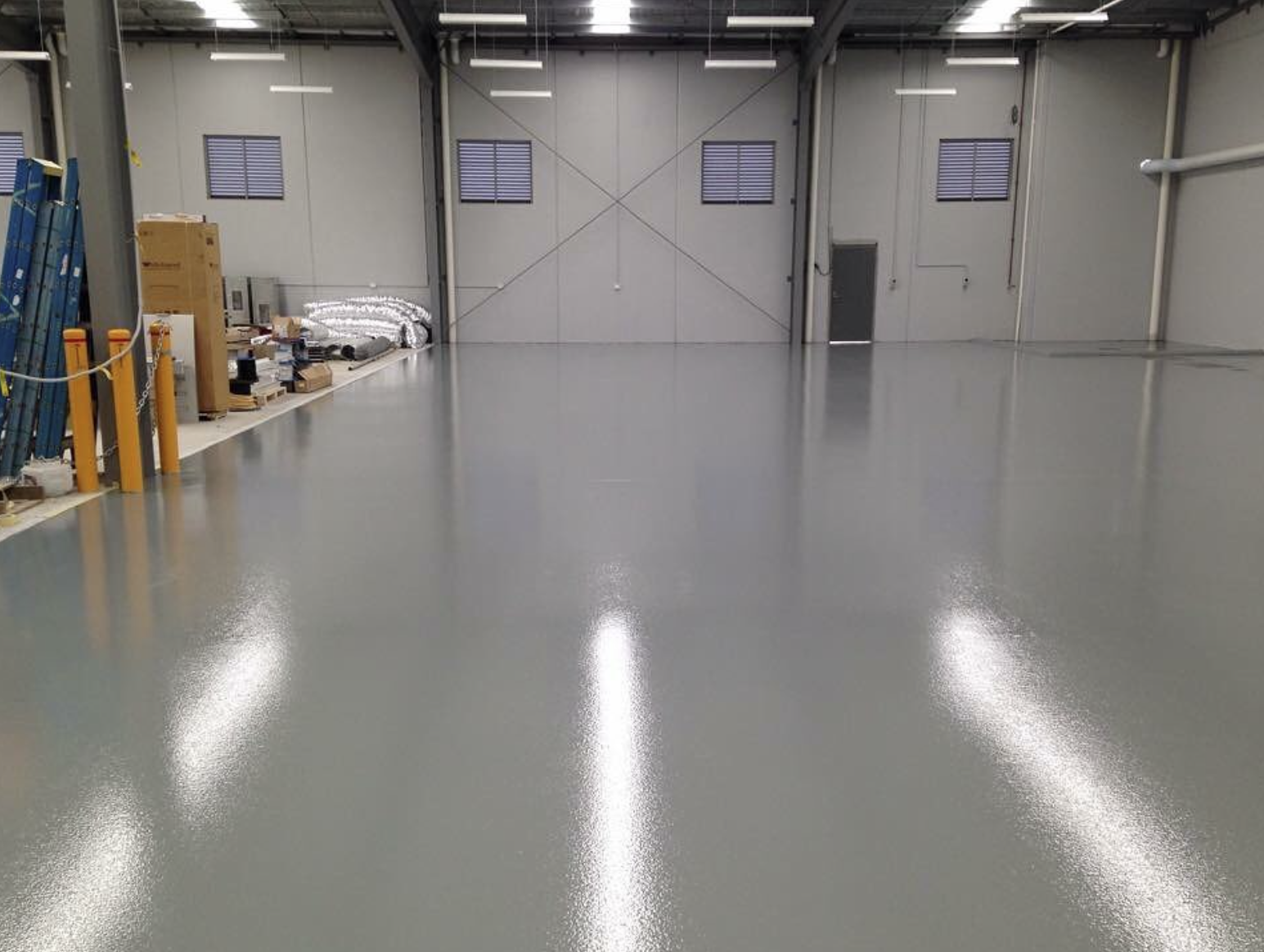
Business floors get judged twice, once by the equipment rolling across them and again by whoever walks through the door. Commercial epoxy flooring is built to satisfy both. We install high-build systems for distribution space and shop floors where pallet jacks and forklifts run daily, quartz systems for commercial kitchens needing traction and chemical resistance under constant washdown, and decorative finishes for retail and hospitality spaces around the city. Color, safety striping, and logos can each be worked into the layout. A commercial epoxy floor coating also keeps concrete dust out of the air, cleans in a fraction of the time, and holds its appearance under heavy foot traffic.

Epoxy Countertop Coatings

Outdoor surfaces face the roughest version of the freeze-thaw cycle. Water works its way into open pores, freezes overnight, expands, and lifts the top layer off in flakes, which is why so many Capital Region patios and porch slabs look chewed up after only a few seasons. Sealing that surface with a proper concrete coating shuts the water out and adds a wear layer that shrugs off de-icers and sun exposure. Exterior work always gets texture built into the finish so footing stays secure when the surface is wet or thawing. Not every outdoor slab can carry a coating, so we check its condition and drainage before recommending one.

What an Epoxy Floor Coating Actually Does for Your Slab

Seals Concrete Against Salt and Moisture

Chlorides and water stop at the surface. The slab underneath stays dry and intact rather than absorbing damage each winter and handing it back as dust and pitting.

Cuts Cleaning Time Down

Dirt has nowhere to hide on a seamless floor. A dust mop covers most weeks, and a wash with warm water and a neutral cleaner handles the rest.

Resists Oil, Chemicals, and Stains

Motor oil, brake fluid, detergent, and dropped paint all sit on top of the coating. They wipe away instead of leaving the permanent dark rings bare concrete collects.

Handles Vehicle and Foot Traffic

Tires, hand trucks, pallet jacks, and steel-toed boots move across a coated floor without gouging or scuffing the surface the way they gradually wear down raw concrete.

Brightens Dim Basements and Bays

A gloss finish reflects overhead light rather than swallowing it, which makes a poorly lit basement or service bay noticeably easier and safer to work in.

Adds Traction Where You Need It

Aggregate broadcast into the topcoat provides grip underfoot. Worth specifying for entries, ramps, kitchens, and any floor that regularly deals with standing water.

Choosing the Right Coating System for Your Space

Flake Broadcast Systems

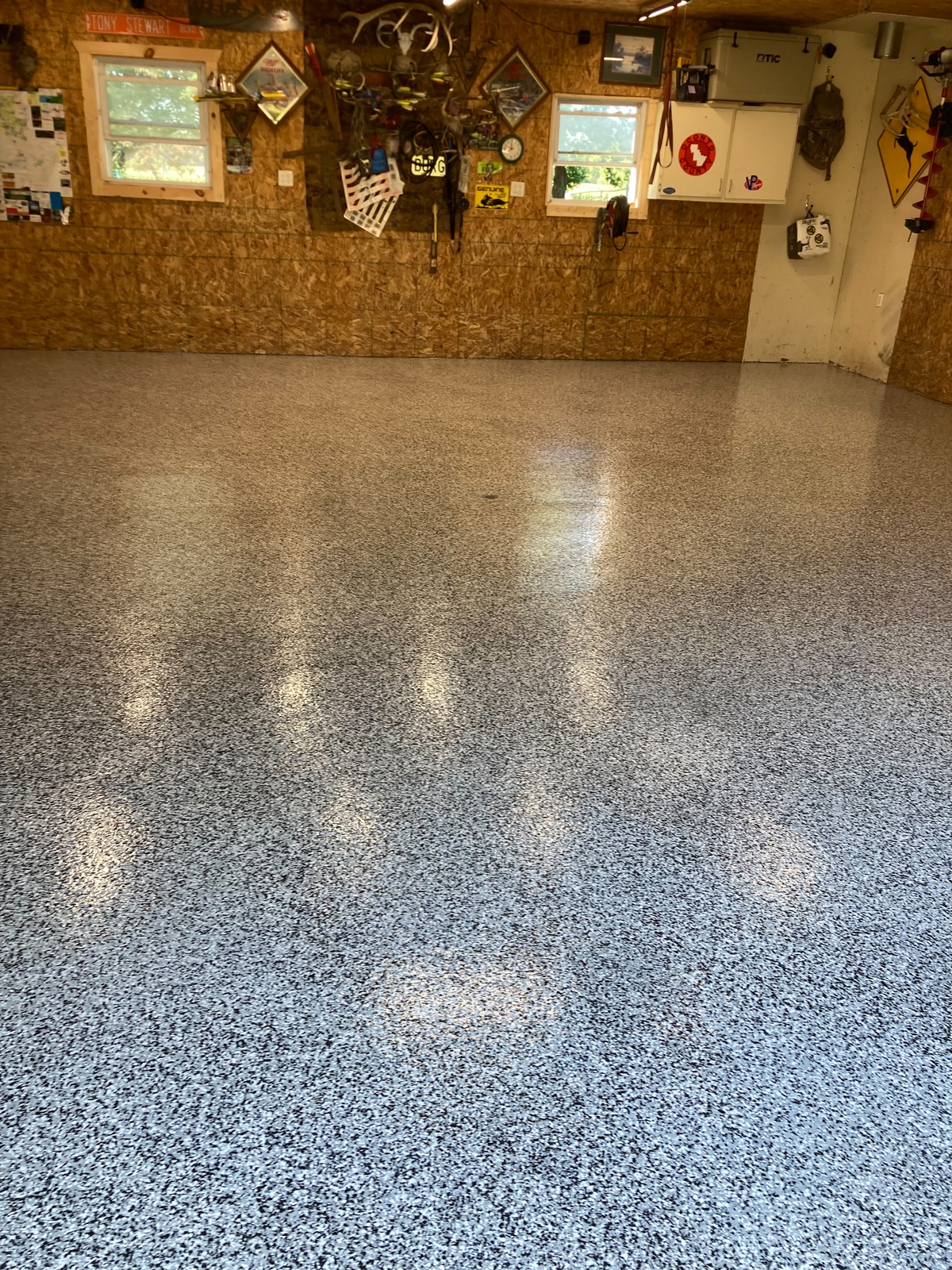
Colored vinyl flake gets scattered into the base coat while it is still wet, then locked beneath a clear layer. The result is a subtly textured floor that camouflages dust, tire marks, and minor flaws in the concrete below it. Flake remains the go-to for garages and finished basements because it is forgiving underfoot, grippy, and available in a long list of blends that can be keyed to almost any color scheme.

Solid-Color Coatings

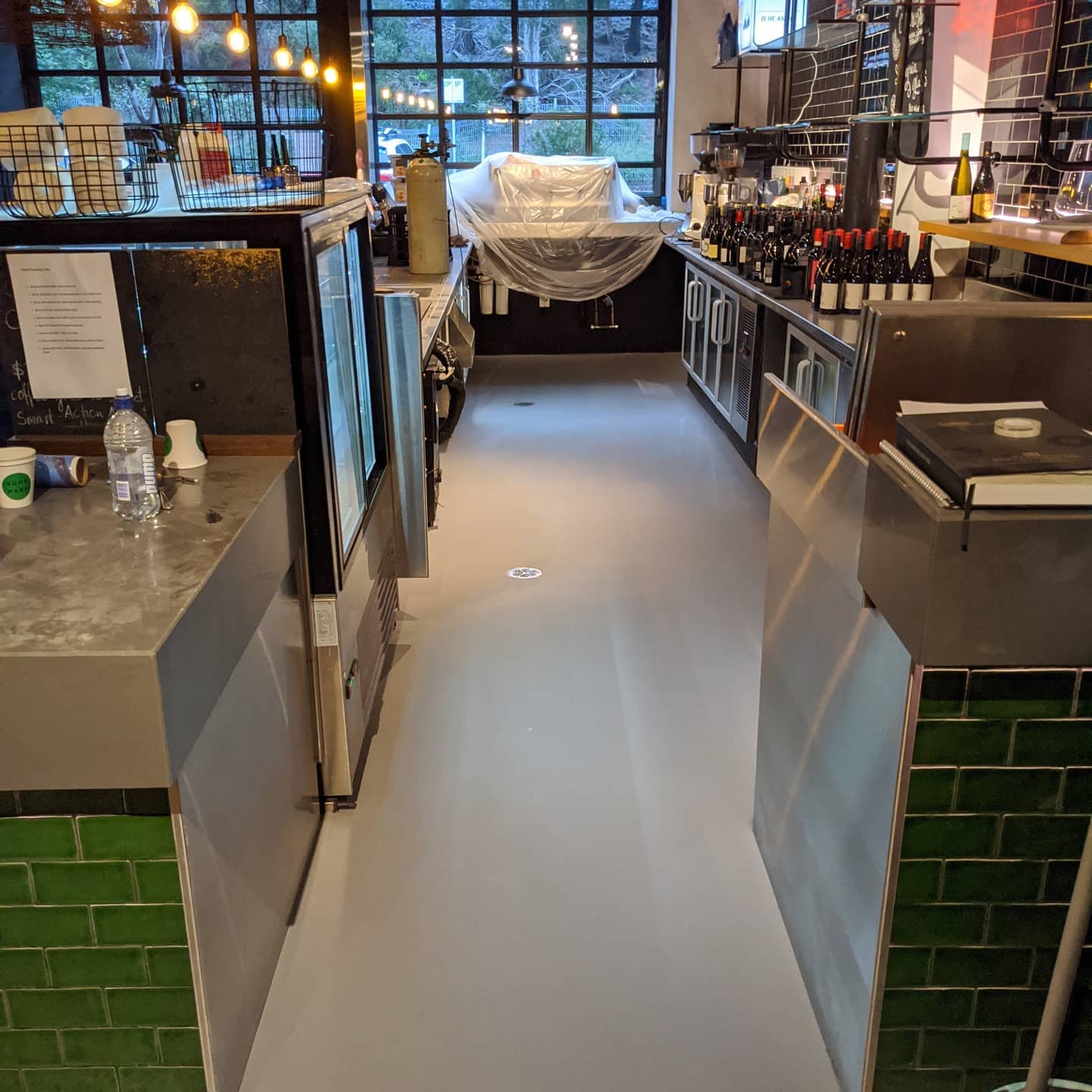
One color edge to edge, in shades running from pale grays and tans through deep blues, black, and high-visibility safety tones. A solid finish reads clean and industrial, which suits mechanical rooms, storage areas, service bays, and any commercial floor where painted traffic lanes and equipment markings need to stand out clearly.

Metallic Finishes

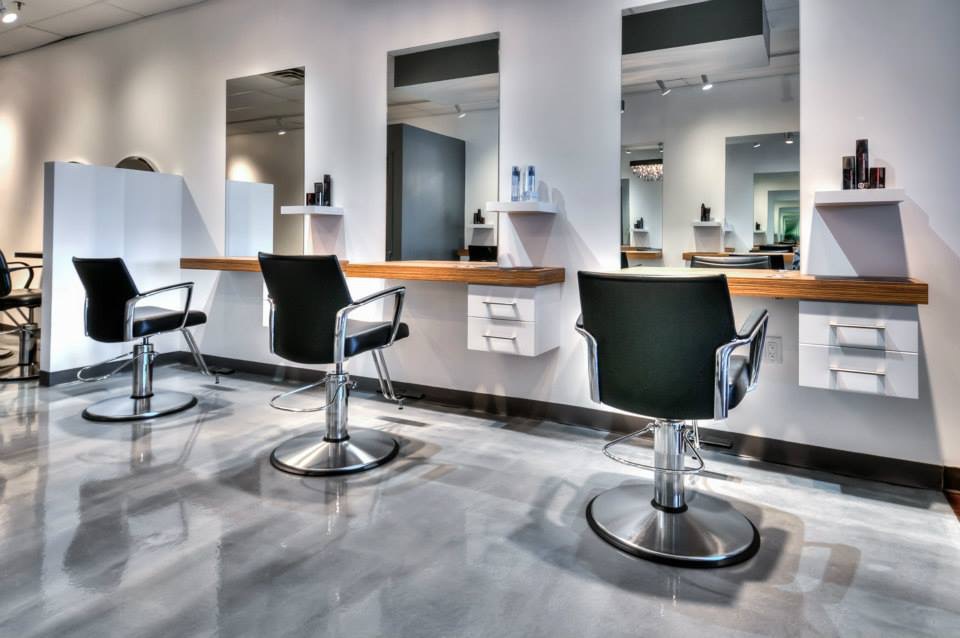
Metallic pigment gets dispersed into resin that is still live and flowing, producing a rippled, layered look with genuine depth to it. No two pours ever land the same way. This one gets specified when the floor is meant to be part of the design, in finished basements, showrooms, studios, salons, and retail spaces that want something worth noticing underfoot.

Quartz Broadcast Systems

Graded quartz aggregate builds a thicker, denser floor that grips underfoot and absorbs impact, heat, and repeated washdown without breaking down. It is the standard specification for commercial kitchens, prep areas, restrooms, and locker rooms, where a smooth coating would not be safe or durable enough for the conditions.

Clear Polyurethane Topcoats

The decorative layer is not what absorbs the abuse. A clear polyurethane coat goes over the top to carry abrasion, chemical contact, and sun exposure, and it is what preserves the gloss over time. That final layer explains much of why a properly built floor still looks sharp after years of traffic.


From First Call to Finished Floor: How Installation Works

1

Tell Us About the Space

Phone, text, or the contact form all work. Give us the rough square footage, how the room gets used, and what the concrete looks like today, cracks and stains included.

2

Slab Inspection and Written Pricing

We come out, check the concrete for moisture, cracking, spalling, and old coatings, take our own measurements, then put a price together based on what the floor genuinely needs.

3

Colors and Scheduling

You pick a system and color from our chart. We confirm install dates, what needs clearing out beforehand, and roughly how long the space will be unusable.

4

Preparation, Repair, and Coating

Prep decides everything that follows it. The slab gets cleaned and profiled, cracks and pitting are filled, and the base coat and decorative layer go down in sequence.

5

Topcoat, Cure, and Walkthrough

The clear coat is applied and left to harden. We walk the floor with you afterward and cover cleaning products, cure windows, and when vehicles or equipment can return.
Get Your Free Estimate

Our Prduct Gallery

Benefits of Epoxy Floors

What Working With a Local, Family-Run Crew Gets You

Upstate Epoxy Floors is family owned and works throughout the Capital Region. Consultations cost nothing, pricing goes in writing before any work begins, and you get a straight assessment of what your concrete can realistically handle.
Albany, Saratoga, Amsterdam, Johnstown, and Gloversville all sit on our regular route. We have seen how concrete in this part of the state behaves under freeze-thaw, brine, and river-valley humidity.
Our materials come straight from the people who make them rather than through a distributor chain. That keeps the product consistent, the pricing honest, and the specification something we can explain to you plainly.
Coatings fail at the bond, almost never in the middle. Careful surface preparation on every slab is the reason our floors stay put, and it is the one step nobody here is willing to rush.
A one-car detached garage and a warehouse floor receive the same attention. We quote projects at any size and scope each one around the conditions we actually find on site.

Keeping an Epoxy Floor Looking New Through Albany Seasons

Upkeep is light, though it is not nothing, particularly in a climate that drags sand and salt indoors five months a year. Sweep or dust mop often, since grit is abrasive and grinding it under tires is the fastest way to dull a finish. For washing, warm water and a pH-neutral cleaner cover everything; steer clear of citrus and acidic products, and skip soap-based cleaners that leave a haze behind. Rinse road salt off over the winter rather than letting it dry in the same spots every time you pull in. Mop chemical spills promptly, slide a pad under jack stands and equipment feet, and the floor holds its look for years.

Common Questions From Albany Property Owners

Will epoxy flooring hold up through Albany freeze-thaw cycles?

Indoors, comfortably. A heated or semi-heated garage does not subject the coating to anything unusual. Exterior slabs deserve a longer conversation, because performance out there depends on the condition of the concrete, how well the surface drains, and how much water is already moving through the slab. We evaluate all three before recommending a system for anything outside.

Does road salt damage an epoxy garage floor over time?

Not the coating itself. Chlorides are hard on bare concrete because they penetrate the pores, and a cured epoxy floor coating never gives them that opening. What we do suggest is rinsing the parking lanes out periodically through winter. Salt residue left to dry and accumulate poses no threat to the floor, but it dulls the finish and gets tracked into the rest of the house.

Can epoxy be installed during a Capital Region winter?

Interior work goes ahead year-round. Coatings cure according to surface temperature and humidity, both manageable inside a closed garage or basement, so the calendar matters far less than people assume. Exterior slabs are a different matter and generally belong in warmer months. Winter is often the easier season to book interior work, since demand shifts toward outdoor projects once the weather breaks.

My basement slab is older and occasionally damp. Can it still take a coating?

Frequently yes, but moisture is the one condition that has to be resolved first. Slabs poured without a vapor barrier can push water vapor upward, and that pressure is what lifts a coating loose months down the road. We test for it during the on-site visit and will tell you plainly if the floor calls for a different approach. Cracks, old patches, and pitting are ordinary repair work and rarely disqualify a slab.

What happens if my garage floor already has a coating that is peeling?

It comes off before anything new goes down. Coating over a failing layer simply transfers the problem into the new floor. Removal and surface profiling are part of the prep work, and we assess how much of the old material is still bonded when we come out to look. A floor flaking in patches usually points to prep being skipped the first time around.

How soon can vehicles or equipment go back on a new floor?

Foot traffic returns well before vehicle traffic, and both windows shift with the system installed and the conditions during curing. Rather than quote a generic figure, we give you the specific timing at the final walkthrough. Driving onto a floor that has not fully hardened is one of the few things that will genuinely damage a new installation, so the wait is worth honoring.

Get a Free Estimate for Your Albany Flooring Project

Got a garage shedding dust across everything stored in it, a lower level you have decided to finish properly, or a facility floor that should have been handled two winters back? We will come look at the concrete and tell you honestly what it needs. There is no charge for the visit and no pressure afterward. Reach us at (518) 774-0128 by phone or text, or drop a message through the site and we will respond quickly.
Request a Free Estimate